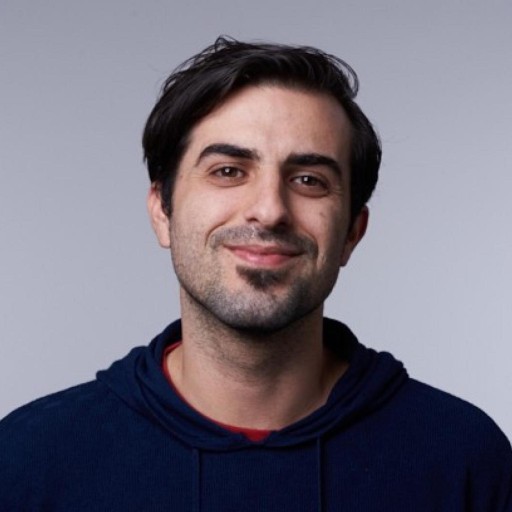
I’m an infrastructure and platform engineer. I’ve been building software professionally since 2008, and for most of the last decade the thing I’ve been building is the ground other engineers stand on.
How I got here
I started on mobile and web — Android and Rails, mostly, for startups and agencies in Spain and Uruguay, the later ones building for US clients. That’s the era the archive is from, and it’s why the older posts here are about Gradle and RxJava.
The turn came at New Work SE in Germany, where I was the first engineer on a platform team whose job was giving product teams a way to expose their APIs. I owned the existing Rails REST gateway — 10k+ req/s, and it had to keep working — while designing and building its GraphQL successor in Scala, learning both the language and the spec on the job. It ended up adopted across the company, 100+ engineers. The team went from two people to about eight while I was there.
That job taught me the thing I’ve organised my work around since: a platform nobody adopts is not a platform. The gateway succeeded because we shipped features product teams actually asked for, wrote a lot of documentation, ran onsite workshops across offices in Germany, Spain and Portugal, and onboarded teams one at a time instead of all at once. I gave talks about it at a meetup in Germany and a conference in Portugal, and recorded screencasts for the internal blog to reach the people a workshop couldn’t.
Then nearly six years at Wellfound, a US company, as one of two infrastructure engineers supporting 20+ product engineers on a platform serving 3M+ monthly visitors. Reliability, scalability and delivery pipelines, end to end: three production EKS clusters, Terraform for everything underneath, GitOps with ArgoCD, on-call, incidents, cost, and a SOC 2 attestation. Owning that surface with two people means you get quite good at deciding what not to do.
These days I work as a fractional platform engineer, contracting for US companies in financial services. Most of that has been as the sole platform engineer on a market-data platform — multi-terabyte Aurora, continuous ingestion from external data sources. Building the observability, the IaC and the delivery story from a fairly bare starting point.
How I work
I’ve been fully remote for six years, in small autonomous teams that run async — all of it with US companies, with colleagues on both coasts, which is where the async habits come from. Valencia, Spain, on CET: full EMEA overlap, and afternoon overlap with the US East Coast.
I like the parts of infrastructure work that are really communication problems. Writing the runbook. Naming the Terraform workspace so the blast radius is obvious from the outside. Working out which of the fifty things in the dashboard is the one you’d actually want woken up for. Infrastructure that only its author can operate isn’t finished.
Lately most of my attention is on AI-assisted infrastructure work — development environments where agents can run with a reduced blast radius, the feedback loops that make that safe, and automating the operational toil that recurs often enough to be worth deleting.
Elsewhere
Email me at [email protected]. I’m on GitHub and LinkedIn. The CV has the detail.